
Advisory & School Culture
Advisory programs can play a powerful role in strengthening relationships between students and building a stronger sense of school community.
However, many schools struggle to design advisory structures that move beyond announcements, study hall, or administrative tasks. When advisory lacks intentional design, it often misses its potential to build meaningful student connections.
Dr. Christopher DeLoach works with schools to design advisory programs that strengthen peer relationships, support student leadership, and create structured opportunities for belonging across campus.
The goal is simple: create systems that help students connect, collaborate, and develop meaningful relationships within the school community.
Why Advisory Matters
Advisory programs are one of the few places within the school day where educators can intentionally focus on student relationships and community building.
When thoughtfully designed, advisory can help schools:
• strengthen peer relationships across grade levels
• support student leadership and mentorship
• create consistent spaces for reflection and dialogue
• build a shared sense of community across campus
• reinforce social and emotional learning
Rather than functioning as an extra class period, advisory can become a structural anchor for belonging within a school culture.
The Advisory by Design Model
Advisory programs are most effective when they include three intentional elements.
Shared Experiences
Students regularly participate in activities that allow them to collaborate, discuss ideas, and solve problems together.
Examples include:
group challenges
class discussions
collaborative projects
community-building activities

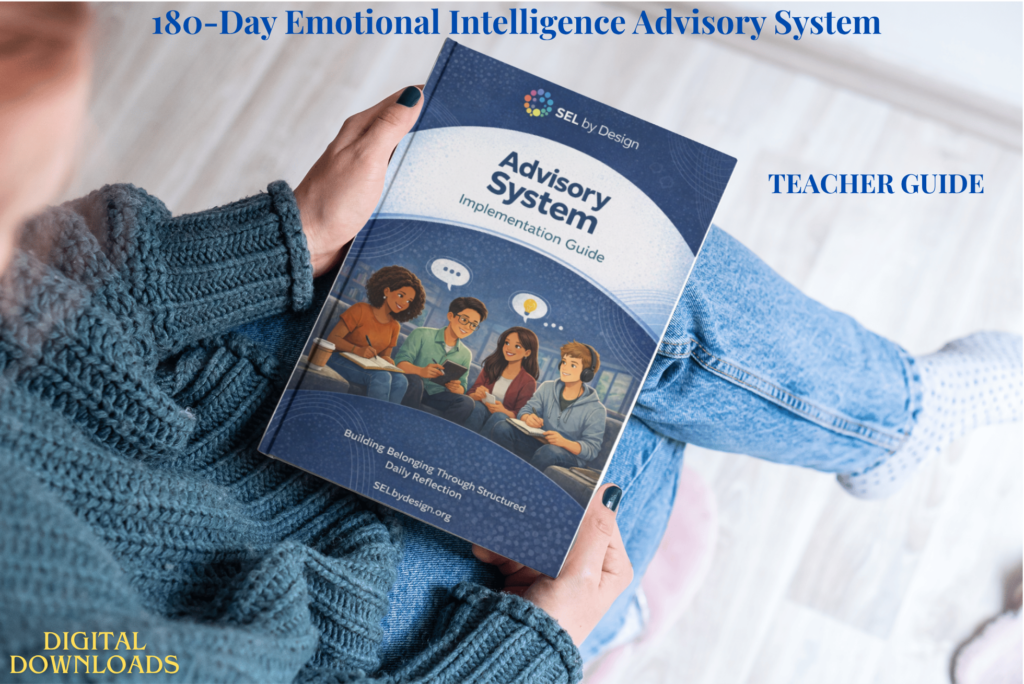
The advisory system is designed to provide educators with practical tools that support student engagement, reflection, and community building.
Additional companion materials, including guided journals and classroom resources, are available to support implementation.

The advisory system is designed to provide educators with practical tools that support student engagement, reflection, and community building.
Additional companion materials, including guided journals and classroom resources, are available to support implementation.
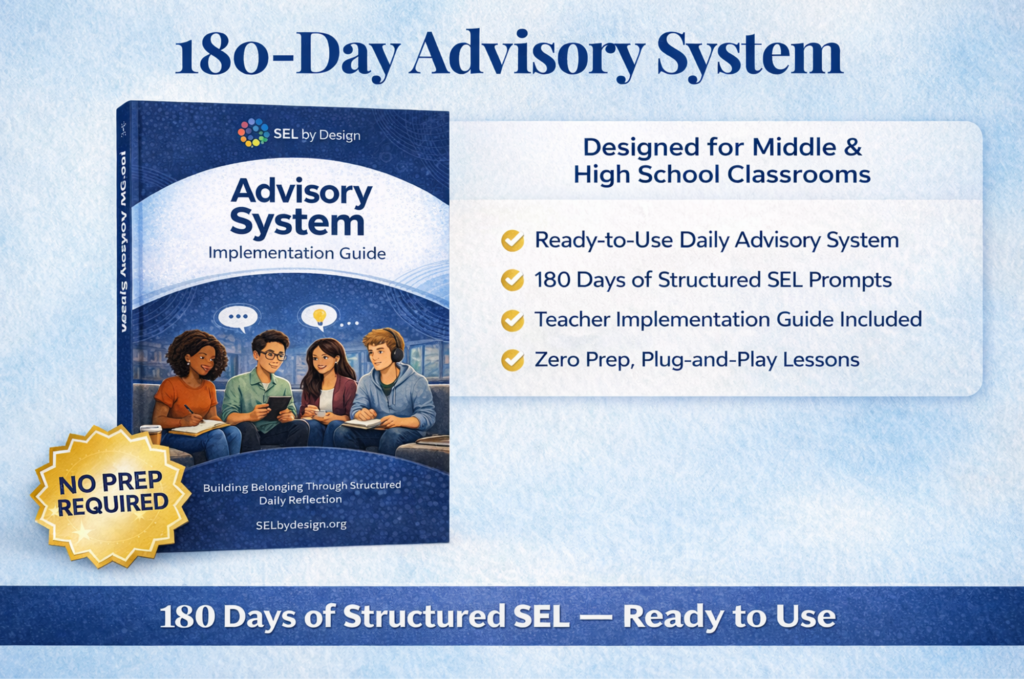
The advisory system is designed to provide educators with practical tools that support student engagement, reflection, and community building.
Additional companion materials, including guided journals and classroom resources, are available to support implementation.
Programs I Help Schools Build
Dr. DeLoach partners with schools and leadership teams to develop advisory systems that are practical, sustainable, and aligned with each campus culture.
Areas of support include:
• Advisory program framework design
• Advisory curriculum structure
• Teacher training and implementation support
• Peer mentorship integration
• Student leadership systems
• Advisory program evaluation and improvement
Each advisory model is designed to fit the schedule, staff capacity, and student culture of the school.
Practical Tools for Advisory Classrooms
SELbyDesign provides practical tools educators can use immediately in advisory settings.
Examples include:
• classroom engagement activities
• reflection exercises
• advisory discussion prompts
• student leadership activities
One of the first resources available through the site is the:
30 Day Riddle Challenge
A classroom engagement tool designed to encourage participation, collaboration, and daily interaction among students.

How Advisory Strengthens School Culture
When advisory programs are intentionally designed, they can transform the social culture of a school.
Strong advisory programs help schools:
• reduce student isolation
• increase peer relationships across groups
• develop student leadership
• create stronger teacher-student relationships
• build a sense of belonging across campus
Over time, advisory becomes more than a class period — it becomes a structural system that strengthens community.
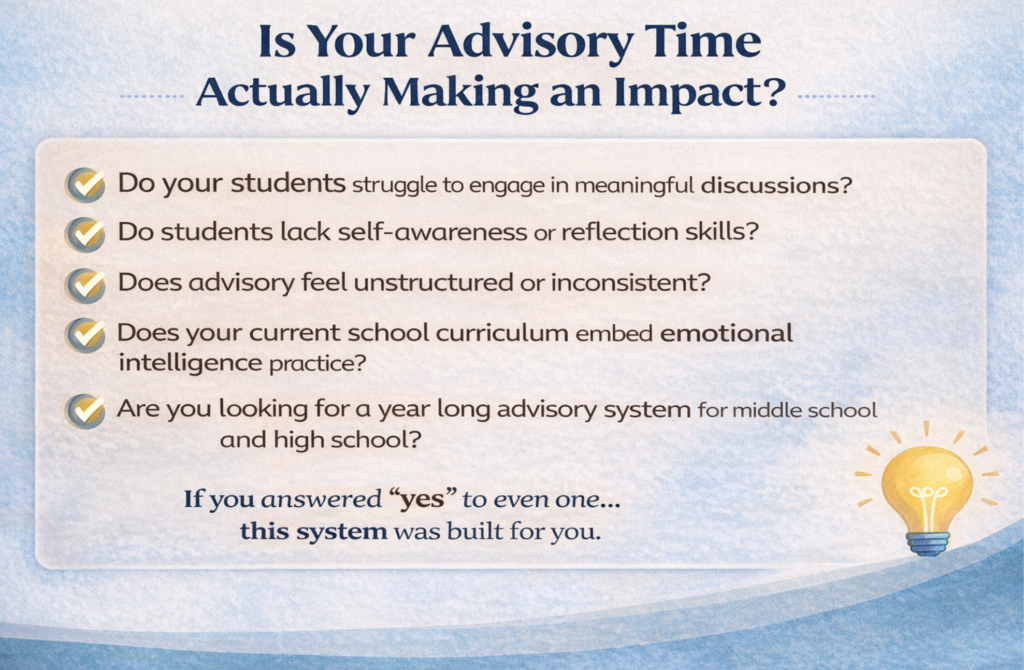
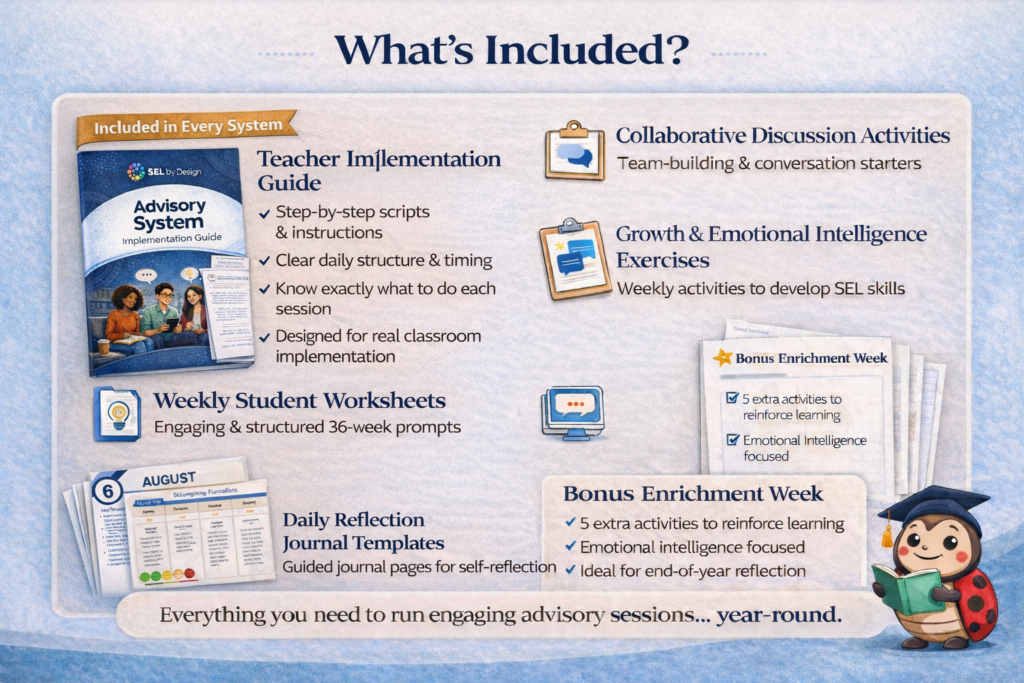
The advisory system is designed to provide educators with practical tools that support student engagement, reflection, and community building.
Additional companion materials, including guided journals and classroom resources, are available to support implementation.
The advisory system is designed to provide educators with practical tools that support student engagement, reflection, and community building.
Additional companion materials, including guided journals and classroom resources, are available to support implementation.
The advisory system is designed to provide educators with practical tools that support student engagement, reflection, and community building.
Additional companion materials, including guided journals and classroom resources, are available to support implementation.